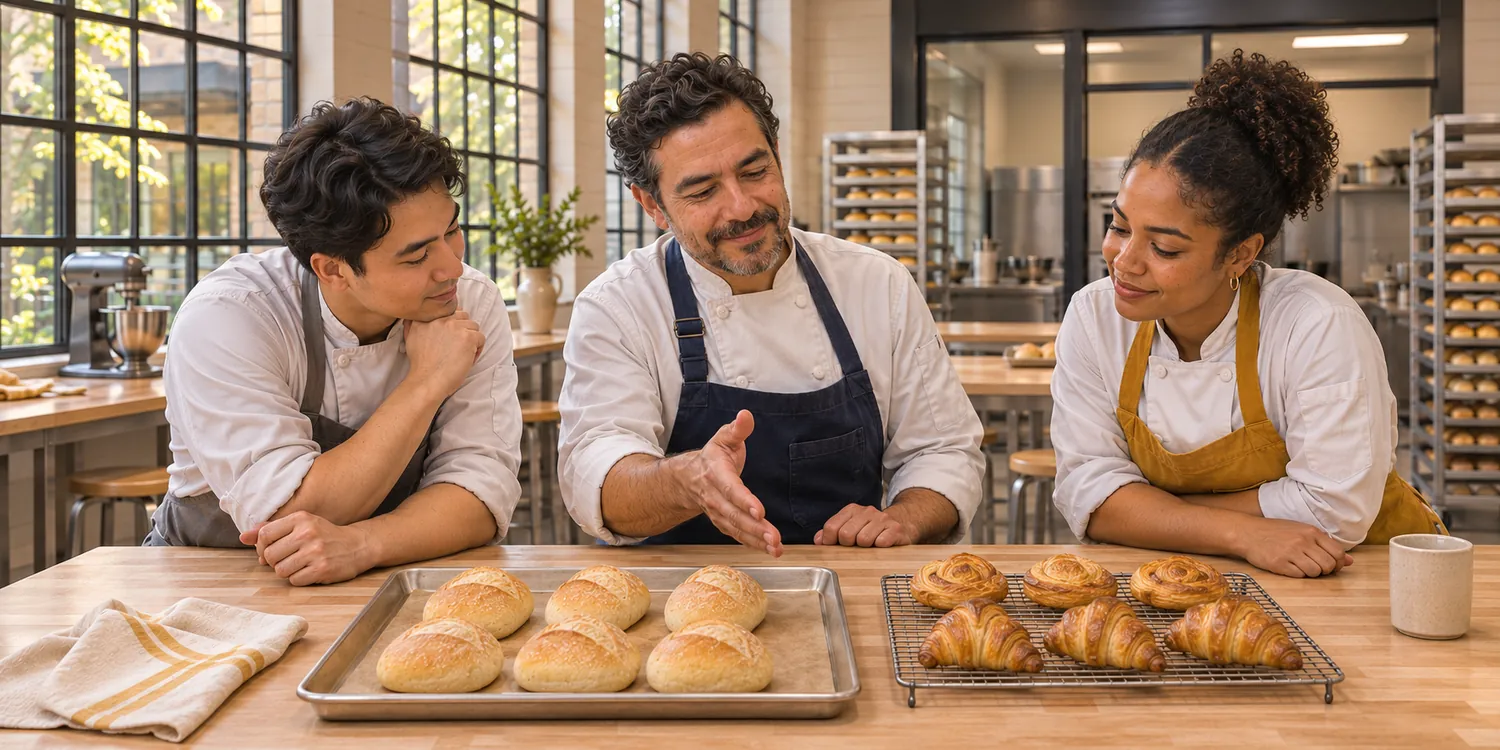
Baking & Pastry Arts
Develop a repeatable baking practice through products and the records behind them.
AAS · 64 credits
4 semesters · Fall entry
Full time: 16 credits per semester
Daytime supervised learning
Original fictional qualification
What you will learn
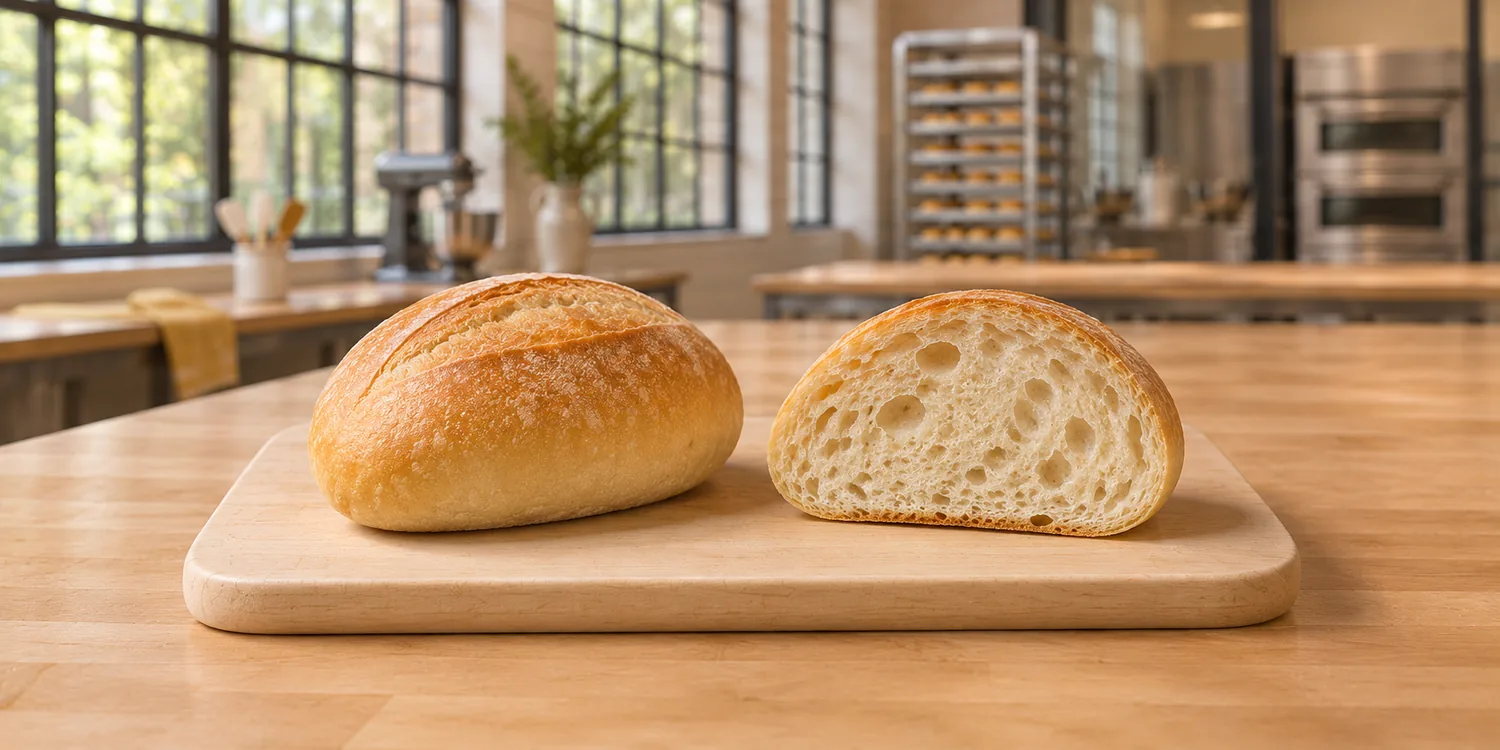
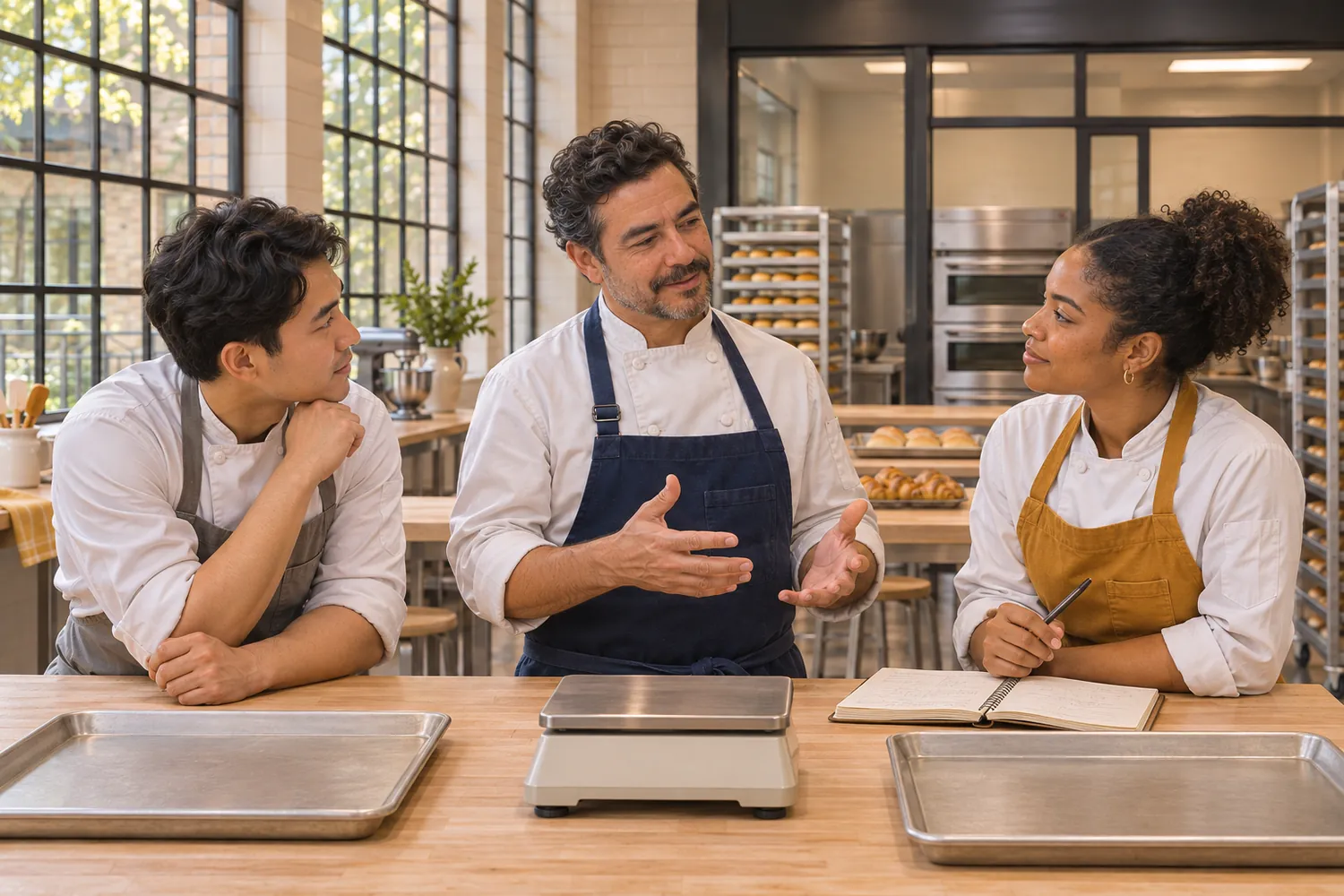
Develop a repeatable baking practice through products and the records behind them. Bread and pastry studios ask students to keep batch identity, compare observations and explain a correction without claiming more than a small trial shows. The four-semester route includes shared communication and quantitative study, bread and pastry production, and an integrated final series. The Bakery Production certificate uses a defined subset of these same courses.
- Preserve batch identifiers and quantity units
- Describe products against explicit criteria
- Compare bread and pastry records
- Revise a feasible production sequence
- Present a product series with its trial archive
Your learning commitment
Full time: 16 credits per semester. The published route starts in fall. Each credit represents 45 total learning hours over fifteen learning units, with assessment week shown separately. The weekly total includes supervised meetings and independent reading, calculations, preparation and portfolio work. A shorter qualification is not a promise of evening-only study.
Learning hours in the illustrative route · Scroll within the table on a narrow screen.
| Semester | Credits | Guided hours / week | Independent hours / week |
|---|---|---|---|
| 1 | 16 | 19 | 29 |
| 2 | 16 | 26 | 22 |
| 3 | 16 | 26 | 22 |
| 4 | 16 | 26 | 22 |
Complete semester route
Graduation categories; a course counts once · Scroll within the table on a narrow screen.
| Requirement | Credits |
|---|---|
| General | 18 |
| Foundation | 10 |
| Major | 30 |
| Integrated | 6 |
| Total | 64 |
Fall / semester 116 credits
Spring / semester 216 credits
Fall / semester 316 credits
Every listed course has a separate catalog record. Prerequisites must be completed first; a corequisite may be completed earlier or taken in the same semester. The example is a complete route, not an individual placement decision. No additional mandatory summer or external employment is needed to make these totals work.
Practice and final assessed work
The work develops through a supervised brief, an identifiable source record, feedback and a reasoned revision. Keep the initial record as well as the corrected version. Exact quantities belong in the written source table; a finished photograph alone does not establish how a product or service decision was reached.
Cumulative GPA 2.0; grade C or better in required professional practice courses; complete the specified assessed portfolio or capstone.
Read Six Batches, One RecordPreparation and progression
- Secondary completion or equivalent record
- Readiness for reading, practical quantities and written records
- Ability to attend the published daytime learning blocks; discuss access requirements individually
The entry conversation concerns readiness to learn, not an existing professional kitchen or hotel identity. No audition, food-photo portfolio or professional employment history is required. Discuss individual access arrangements privately with Student Support. A lighter load may change the next available prerequisite sequence.
Inspect accepted and remaining creditsAdviser, fees and next steps
Chef Mateo Sanz, Baking & Pastry Adviser. Wednesday 14:00–16:00 Eastern Time during teaching weeks; confirm before attending. Room P112. [email protected] · +1 (502) 555-0186.
2027–28 tuition is $620 per credit. The kitchen resource charge is $42.00 per enrolled credit, plus a $240 service fee per enrolled term. Personal books and supplies are separate; the first-entry personal allowance is not a college charge.
Learning in context